
The satisfying crunch of freshly made sauerkraut fills the kitchen, as the tangy aroma brings back memories of family meals and hearty fare. This Homemade Sauerkraut recipe takes just a few simple ingredients and a bit of time to create a probiotic-rich condiment that enhances almost any dish. The magic lies in the fermentation process that transforms basic cabbage into a flavorful and gut-friendly staple.
This recipe is perfect for anyone who enjoys bold flavors and wants to experiment with homemade fermentation. It’s an excellent project for the weekend, allowing you to prepare a batch that can be stored in the refrigerator for several weeks.
Why You’ll Love This Recipe
- It only requires two simple ingredients: cabbage and sea salt.
- The fermentation process produces a unique, tangy flavor that enhances dishes.
- You control the fermentation time for personalized taste and texture.
- Making sauerkraut at home is cost-effective and satisfying.
What You’ll Need
Gather these ingredients to get started on your homemade sauerkraut.
For the Sauerkraut
- 1 2 lb head of cabbage, outer leaves peeled off and rinsed
- 1 tbsp Celtic sea salt (start with a tsp)
Use kosher salt for a similar flavor.
Substitutions & Swaps
- Replace cabbage with other brassicas like kale.
- Use Himalayan pink salt in place of Celtic sea salt.
- Add spices like caraway seeds for extra flavor.
- Substitute with red cabbage for a vibrant variation.
How to Make It
Creating your own sauerkraut is straightforward and rewarding.
Peel outer layers
Peel the outer layers of the cabbage, discarding any damaged leaves. Rinse the leaves and the cabbage well, then reserve the leaves for later use.
Cut and shred
Cut the cabbage in half, remove the core, then quarter and shred it with a knife, mandoline, or food processor.
Sprinkle salt
Place the shredded cabbage in a large mixing bowl and sprinkle on 1 teaspoon of salt.
Massage cabbage
Massage the cabbage for 10-15 minutes until a brine forms at the bottom of the bowl. When squeezed, the cabbage should release some liquid.
Transfer to jar
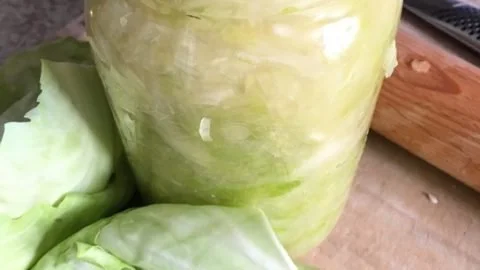
Transfer the cabbage to a jar in stages, pressing it down to remove air pockets and ensure it’s submerged in the brine.
Secure leaves
Using the reserved leaves, fold them up and tuck them into the jar to keep the shredded cabbage submerged. Secure under the shoulder of the jar.
Add weight
Place a weight over the top of the cabbage and cover loosely with a lid. Set the jar on a baking sheet to catch any overflow during fermentation.
Ferment
Allow the sauerkraut to ferment for 5-7 days. Check it daily, removing the lid to release any gas buildup. Taste daily until you’re satisfied with the flavor and texture, then move it to the refrigerator.
How to Store It
Fridge: Store in an airtight container for up to 4-6 weeks.
Freezer: No, freezing alters the texture.
Reheat: Not applicable; serve cold or at room temperature.
Tips for Best Results
- Use fresh, firm cabbage for the best texture and flavor.
- Ensure the cabbage is fully submerged in brine to prevent spoilage.
- Monitor the fermentation process closely in warm temperatures.
- Taste frequently; fermentation time can vary based on environmental conditions.
Serving Suggestions
- Serve alongside bratwurst or other sausages for a traditional pairing.
- Add to salads for a tangy crunch.
- Use as a topping on sandwiches or burgers for added flavor.




Leave a Comment