
There’s something wonderfully nostalgic about the tangy crunch of fermented coleslaw. Known for its unique mix of textures and flavors, this vibrant dish incorporates an array of root vegetables, making it a nutritious, colorful addition to any meal. With a little patience, you can create this delightful fermented coleslaw that not only tastes amazing but also supports gut health. The fermentation process enhances the flavors, making the final product irresistibly delicious.
This recipe is perfect for anyone looking to incorporate more fermented foods into their diet or simply wanting a tasty side dish. It’s an excellent choice for potlucks, family gatherings, or meal prep for the week. Fermented coleslaw can last for several weeks in the fridge, so it’s a fantastic make-ahead option.
Why You’ll Love This Recipe
- The unique combination of root vegetables adds distinctive flavors and textures.
- It’s a nutritious boost to any meal, providing vitamins and probiotics.
- The fermentation process intensifies the delicious flavors as time goes on.
- It’s easy to customize with your favorite spices and herbs.
What You’ll Need
Gather your ingredients to create this flavorful fermented coleslaw.
For the Vegetables
- 1 medium head of cabbage
- 2-3 large beets, scrubbed
- 1 rutabaga, scrubbed and tough skin removed
- 2 turnips, scrubbed and tough skin removed
- 3 large carrots, scrubbed
- 1 large onion, peeled
- 4 cloves of garlic, minced
- Bunch of dill, chopped
- 1-2 celery roots, scrubbed and tough skin removed
- 1 horseradish root, scrubbed and tough skin removed
- 2-3 radishes, scrubbed
- 2-3 parsley roots, scrubbed
- 2-3 young salsify roots, scrubbed
- 2-3 young scorzonera roots, scrubbed
- 2-3 parsnip roots, scrubbed
For Seasoning
- Salt, to taste
- Caraway seeds, to taste
- 1-2 Tbsp pickling spice mix
- Cilantro seeds, to taste
- Dill seeds, to taste
- Whole or crushed peppercorns
- Mustard seeds, to taste
- Fresh or dried cayenne pepper, to taste
- Fresh or dried ginger, to taste
- Fresh or dried turmeric, to taste
Salting is essential for fermentation.
Substitutions & Swaps
- Use any seasonal root vegetable.
- Replace horseradish with radishes.
- Omit spices for a simpler taste.
- Substitute cabbage with green leafy vegetables.
How to Make It
Creating your own fermented coleslaw is a simple and enjoyable process.
1. Wash
Wash your vegetables thoroughly. Brush them lightly if necessary, but no need to peel most. Remove tough skins from mature rutabaga or turnips and any wax if purchased.
2. Weigh
Weigh your bowl and zero it on the grams setting. Add all prepared ingredients into this bowl as you go.
3. Prepare
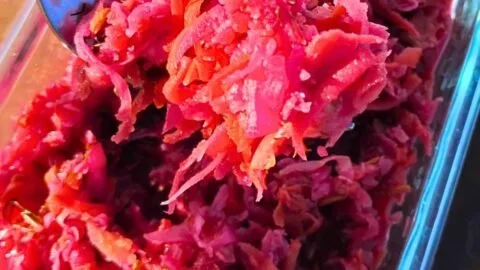
Chop the vegetables into thin strips or bite-sized pieces. Aim for similar sizes to ensure consistent fermentation.
4. Salting
Sprinkle salt across the vegetables. Use enough to taste for seasoning, which aids in the fermentation process by drawing out moisture.
5. Work The Slaw
Massage the vegetable mixture to release juices. Continue for several minutes until sufficient brine forms. This step activates the fermentation process.
6. Bottle The Slaw
Pack the vegetable mixture into cleaned jars, pressing it down firmly. Leave headspace at the top and ensure vegetables are submerged beneath the brine. Seal the jars loosely to allow gases to escape.
7. Fermenting and Maintenance
Store jars at room temperature in a dark place for 1-2 weeks. Check daily to ensure vegetables remain submerged; press down with a clean utensil if necessary.
8. Storage
Once fermented to your liking, transfer the coleslaw to the fridge.
How to Store It
Fridge: lasts up to 4 weeks in a sealed container.
Freezer: no, affects texture and flavor.
Reheat: not typically reheated; enjoy chilled.
Tips for Best Results
- Use a variety of colorful root vegetables for a more visually appealing dish.
- Ensure jars and utensils are sterilized to promote good fermentation.
- Experiment with different spices to find your preferred flavor profile.
- Adjust the salt level based on your taste and fermentation environment.
Serving Suggestions
- Serve as a vibrant side dish for grilled meats or sandwiches.
- Add atop tacos or salads for a crunchy texture.
- Pair with cheeses or charcuterie boards for a flavorful bite.



Leave a Comment