
There’s something deeply satisfying about opening a jar of homemade sauerkraut and witnessing all those vibrant, tangy flavors bursting forth. Making sauerkraut in a crock is surprisingly simple, taking about two weeks to ferment and resulting in a crunchy, probiotic-rich side that adds zest to any meal. This method allows you to control the flavor and texture, ensuring a perfectly tangy finish every time.
This recipe is perfect for anyone looking to dive into fermentation or simply wanting to enhance their meals with a nutritious, homemade condiment. Whether you’re preparing for a family barbecue or just want to add some depth to your weeknight dinners, this sauerkraut can be made ahead of time and stored for extended periods, making it a versatile addition to your kitchen.
Why You’ll Love This Recipe
- It’s made with just three main ingredients, keeping it simple and accessible.
- The fermentation process enhances the natural flavors of cabbage, leading to a deliciously tangy result.
- Customizable with additional spices or veggies to suit your taste.
- It keeps for a long time in the fridge, giving you a ready side dish whenever you need it.
What You’ll Need
Gather the following ingredients to get started on your sauerkraut.
For the Cabbage
- 2 lbs shredded green cabbage (or other cabbage)
- 18 grams kosher salt (roughly 1 tablespoon)
For Optional Preservation
- 2 tablespoons apple cider vinegar (optional)
Note: Vinegar helps prevent mold on the cabbage leaves.
Substitutions & Swaps
- Use red cabbage for a different color and taste.
- Sea salt can replace kosher salt if needed.
- Omit apple cider vinegar if you’re not concerned about mold.
How to Make It
Prepare your ingredients and let’s start fermenting!
Remove Outer Leaves
Remove 2-3 of the outer leaves from the cabbage and save them for putting on top of the cabbage as it ferments. Mix them in a bowl with the apple cider vinegar and reserve. The vinegar helps prevent mold on the leaves, but it’s optional.
Shred Cabbage
Shred the cabbage using a knife or mandoline slicer. Discard the cabbage cores.
Weigh and Salting
Weigh the cabbage in grams. Multiply the weight of the cabbage by 0.02, then weigh out that amount of salt.
Mix Cabbage with Salt
Mix the cabbage with the salt and put it into the fermentation crock.
Pound Cabbage
Pound the cabbage using a mallet or other heavy tool until it’s wilted and has started to release water.
Cover with Leaves and Weight
Put the reserved cabbage leaves on top of the pounded cabbage. Next, place a fermentation weight or a clean stone on top and cover the crock with a lid. The cabbage should be barely covered by a layer of brine.
Label and Monitor
Label and date the crock. Every few days, check on the cabbage and stir it occasionally, pressing it back underneath the brine before putting the lid back on.
Store and Enjoy
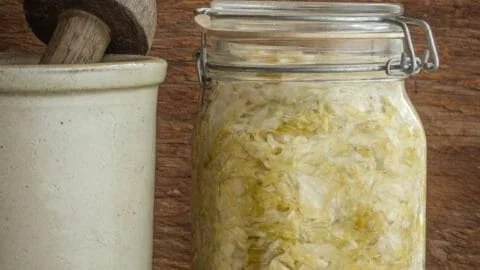
After two weeks of fermenting at room temperature, the sauerkraut will have reached the desired acidity and is safe to can or store in the fridge. Pack it into a mason jar, pressing it down so that it’s covered by brine. This sauerkraut will last a long time in the refrigerator and continue to become more sour over time.
How to Store It
Fridge: Lasts several months in a sealed jar.
Freezer: No, texture will change upon thawing.
Reheat: Not needed; enjoy cold or at room temperature.
Tips for Best Results
- Ensure all cabbage is submerged in brine to prevent spoilage.
- Use a clean utensil each time you check or stir the sauerkraut.
- Adjust the fermentation time based on your taste preference for tanginess.
Serving Suggestions
- Serve as a tangy topping on sandwiches and sausages.
- Pair with rich meats for a delightful contrast.
- Enjoy alongside hearty dishes like stews or braises for added crunch.



Leave a Comment